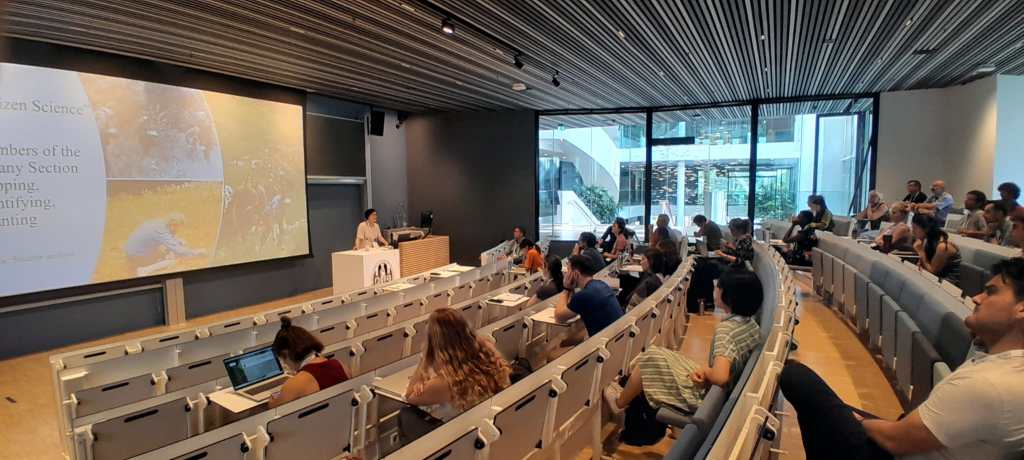
A small historical moment at the European Congress of Conservation Biology 2026: In early July, eight environmental historians (among them four members of our EuCoHN network, Astrid M. Eckert, George Holmes, Cormac Walsh and Monica Vasile) brought history into one of the Europe’s largest conservation science meetings, through the symposium Conservation Histories and Humanities: Understanding the Present, Unearthing the Past, co-organized by George Holmes and Monica Vasile. The idea they wanted to convey was that if conservation wants to learn from its successes and failures, it also needs to understand how today’s institutions, ideas, and practices came to be. History is not just an inert record of the past, or a source of very good stories, it is also a way of making sense of the present. The paper topics ranged from the roots of neoliberal conservation, subversive environmental research in the former GDR, and wildlife counting in Zambia, to bird migrations, hunting tourism, Przewalski’s horse reintroductions to Mongolia, white-tailed deer restoration in the United States, and the visual culture of early Dutch conservation. The audience was substantial, despite the fact that the panel took place on the last day of a long conference. The discussions were lively, and it felt like an exciting step in bringing humanities scholars and conservation scientists into closer conversation.

